
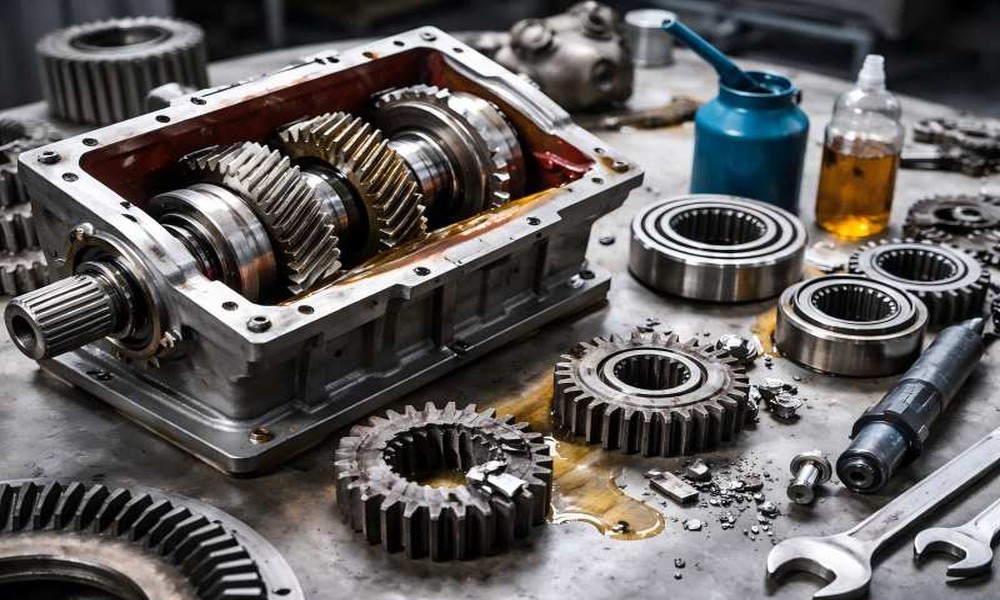
Gearbox Repair: Accurate Troubleshooting & Long-Lasting Repairs

Gearbox repair stands as a testament to human ingenuity and mechanical skill, a craft that combines diagnostic acumen with hands-on expertise to restore one of the automobile’s most sophisticated systems. Consider for a moment what happens inside that seemingly impenetrable metal housing bolted between engine and drive wheels: gears meshing at thousands of revolutions per minute, bearings supporting tons of rotational force, hydraulic systems orchestrating split-second shifts with balletic precision. When this mechanical symphony falls silent or begins playing discordant notes, when smooth acceleration gives way to jarring hesitation, skilled craftsmen must step forward to diagnose the malady and restore harmony. In Singapore’s dense urban landscape, where vehicles navigate perpetual congestion in tropical heat, transmissions endure conditions that would have astonished the engineers who first conceived these marvellous devices.
The Art and Science of Accurate Troubleshooting
The master technician approaches a failing transmission much as a physician approaches a patient, gathering symptoms, conducting examinations, forming hypotheses, and testing theories until the truth reveals itself. This diagnostic process represents perhaps the most critical phase of gearbox repair work, for an incorrect diagnosis leads inevitably to wasted effort, unnecessary expense, and continued frustration.
The troubleshooting process unfolds systematically:
- Initial consultation where the technician listens carefully to the owner’s description of symptoms, timing, and circumstances
- Visual inspection checking for obvious signs of fluid leakage, physical damage, or disconnected linkages
- Test drive evaluation experiencing firsthand the transmission’s behaviour under various conditions
- Fluid analysis examining colour, smell, and consistency for clues about internal condition
- Electronic diagnostics retrieving fault codes that point toward specific component failures
- Mechanical testing measuring hydraulic pressures, checking shift solenoid operation, verifying sensor readings
According to experienced professionals providing gearbox repair services in Singapore, “Accurate diagnosis requires patience and systematic methodology. Many transmission problems present similar symptoms but originate from entirely different causes. Rushing to conclusions wastes the customer’s money and damages the workshop’s reputation.”
Common Ailments and Their Origins
The history of any transmission tells itself through the specific manner of its failure. A transmission that slips between gears speaks of worn clutch packs or failing hydraulic pressure. One that refuses to shift out of a particular gear points toward solenoid failure or electronic control issues. Grinding sounds during gear changes in a manual box indicate worn synchroniser rings that can no longer match shaft speeds smoothly. Each symptom carries meaning for those trained to interpret the mechanical language.
The Foundations of Long-Lasting Repairs
Quality transmission repair rests upon several foundational principles that distinguish enduring solutions from temporary fixes. The first principle holds that shortcuts never succeed in the long run. A transmission reassembled with worn bearings that “still look acceptable” will fail prematurely. Seals that appear functional but have lost their resilience will leak. Solenoids that work intermittently will soon stop working entirely.
Essential elements of durable repairs include:
- Complete disassembly and inspection rather than merely addressing obvious failures
- Replacement of all worn components not just those that have failed catastrophically
- Thorough cleaning to remove metal particles and contaminated fluid
- Precise reassembly following manufacturer specifications for torque values and clearances
- New gaskets and seals regardless of the condition of original parts
- Quality replacement parts meeting or exceeding original equipment standards
- Proper fluid filling with specified type and correct quantity
- Comprehensive testing before returning the vehicle to service
The craftsman who performs gearbox repairs with these standards accepts no compromises, understanding that each shortcut represents a future failure waiting to happen.
The Value of Experience and Continuous Learning
Transmission technology has evolved remarkably since those early days of crash gearboxes and manual clutches. Modern continuously variable transmissions bear little resemblance to their four-speed ancestors. Dual-clutch automated manuals operate on principles their inventors could scarcely have imagined. Electronic control systems manage complexity that would overwhelm purely mechanical designs.
This evolution demands that gearbox repair specialists commit themselves to perpetual education. The technician who mastered traditional automatic transmissions twenty years ago must now understand computer networking protocols, sensor calibration procedures, and software update processes. The best workshops invest heavily in training, understanding that knowledge represents their most valuable tool.
Industry observers familiar with Singapore’s automotive sector note that “The rapid introduction of new transmission technologies creates a knowledge gap in the repair industry. Workshops must invest in training and equipment to service modern vehicles properly, or they risk becoming obsolete.”
Preventive Wisdom for Vehicle Owners
The finest repair work remains that which proves unnecessary because proper maintenance prevented failure. Vehicle owners possess more power than they typically realise to extend transmission life and avoid costly repairs. Regular fluid changes remove contaminated lubricant before it causes damage. Allowing transmissions to warm properly before demanding full performance protects components during their most vulnerable moments. Avoiding aggressive driving habits reduces stress on clutches, bands, and gears.
These preventive measures require modest investment but return enormous dividends. The owner who spends hundreds on maintenance avoids spending thousands on repairs.
Looking Forward with Confidence
The road ahead remains clear for those who understand the value of skilled workmanship and honest dealing. Transmissions will continue to fail, as all mechanical systems must eventually do, but failures need not become catastrophes when addressed by capable hands. The workshop that combines diagnostic accuracy with quality repairs, that refuses to compromise standards for short-term profit, that treats each vehicle as though it belonged to family, builds a reputation that transcends advertising and survives economic downturns. For vehicle owners navigating Singapore’s demanding roads, such workshops provide not merely mechanical services but peace of mind, knowing their vehicles receive care worthy of the engineering excellence embodied in modern gearbox repair.
