
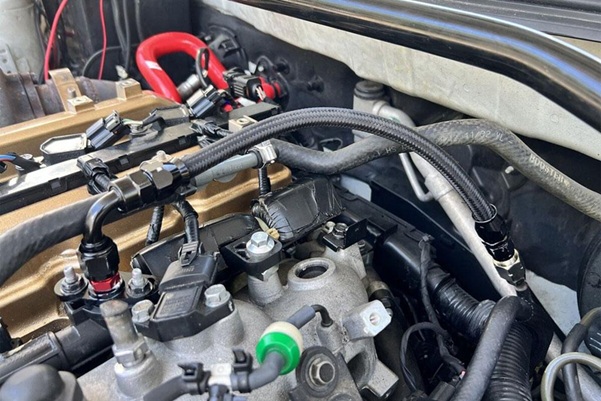
PTFE Fuel Hose Customization Options for Automotive OEMs

Polytetrafluoroethylene fuel hoses have become a cornerstone in automotive engineering, particularly for Original Equipment Manufacturers (OEMs) aiming to meet stringent performance, safety, and regulatory standards.
These PTFE fuel line hoses offer unparalleled chemical resistance, thermal stability, and durability, making them ideal for modern fuel systems.
Customization options further enhance their adaptability to diverse automotive applications.
Key Customization Features
1. Inner Liner Material and Configuration
- Smooth Bore PTFE: Provides minimal fluid resistance, ideal for high-flow applications.
- Convoluted PTFE: Features a flexible, corrugated design, suitable for tight routing and vibration-prone areas.
- Conductive PTFE: Incorporates carbon additives to dissipate static charges, enhancing safety in volatile environments.
2. Reinforcement Options
- Stainless Steel Braiding: Offers high tensile strength and resistance to external abrasions.
- Aramid Fiber Braiding: Provides lightweight reinforcement with excellent impact resistance.
- Hybrid Reinforcement: Combines materials to balance weight, strength, and cost.
3. Outer Covering Materials
- PVC Coating: Adds an extra layer of protection against environmental factors.
- Silicone or Nylon Sleeving: Enhances abrasion resistance and provides color-coding options for easy identification.
4. Size and Length Configurations
OEMs can specify inner diameters ranging from 1/8″ to 1″, with outer diameters tailored to fit specific routing requirements. Hose lengths can be customized to meet the exact needs of the vehicle’s fuel system layout.
5. Temperature and Pressure Ratings
PTFE hoses can be engineered to withstand a wide range of temperatures, from -65°C to +260°C, and pressures up to 323 bar (4,250 psi), ensuring reliability under various operating conditions.
Applications in Automotive Systems
Customized PTFE fuel hoses are integral to several automotive systems, including:
- Fuel Injection Lines: Ensuring precise fuel delivery to the engine.
- Turbocharger Systems: Handling high-pressure fuel feeds.
- Ethanol and Flex-Fuel Vehicles: Withstanding the corrosive effects of alternative fuels.
- High-Performance and Motorsport Vehicles: Providing durability under extreme conditions.
Manufacturing and Quality Assurance
Leading manufacturers offer PTFE hoses that meet or exceed industry standards, such as SAE J517 100R14. These hoses are produced in ISO 9001:2015 certified facilities, ensuring consistent quality and performance.
Conclusion
For automotive OEMs, customized PTFE fuel hoses present a reliable solution to meet the evolving demands of modern fuel systems. By leveraging advanced materials and manufacturing techniques, these hoses provide the necessary performance and safety features required in today’s automotive applications.
