
What Temperature Does Diesel Gel in Minnesota and the Midwest?

If you run a diesel truck, tractor, or farm tank in the upper Midwest, you already know the feeling of turning the key on a cold morning and waiting to see what happens. You understand fuel filters and cold starts. What you may want is a clear set of numbers and a plan.
I wrote this guide to give you both. I looked at how diesel behaves as it cools, how Midwest winters compare to those numbers, and what products give owners the most protection. If you want the basic answer to what temperature does diesel gel, I give it here, and I explain how it applies to Minnesota, Wisconsin, Iowa, the Dakotas, Michigan, and the states near them.
By the end, you will know which temperatures to watch, why your fuel can fail before the coldest night of the year, and which Howes Products fit each situation.
The Short Answer on Gelling Temperatures
Diesel does not turn to gel at one exact temperature. It goes through stages, and each stage causes a different problem.
- Cloud point: Untreated No. 2 diesel starts to form wax crystals at around 15°F to 20°F. The fuel looks hazy. Your engine may still run, but the crystals begin to collect in the filter.
- Filter plugging point: This often falls a few degrees below the cloud point. The wax clogs the filter screen, and the engine loses power or stops.
- Gel point: Near 0°F to -10°F, the wax crystals bind together and the fuel thickens until it will not flow.
These numbers change with the fuel. Your actual fuel could behave a little differently from my numbers, which is why the cloud point matters most. Once fuel reaches it, trouble can start.
Why Minnesota and the Midwest Need Extra Attention
In the Twin Cities, January lows often sit near 0°F to 10°F. Northern Minnesota, North Dakota, and parts of Wisconsin and Michigan can see -20°F or colder. Iowa and northern Illinois drop below zero several times each winter.
That means most of the upper Midwest passes through the cloud point every year, and many places pass through the gel point as well.
Fuel in a parked truck matches the outside air. A running engine warms the fuel that returns to the tank, but the fuel in a line, a filter, or a sitting tank has no heat source. Wind chill does not change fuel temperature, but a stiff wind can cool a filter housing faster.
Why Winter Blend Fuel Is Not Always Enough
Fuel suppliers in cold states sell winter blend diesel. They mix in No. 1 diesel or add chemicals to lower the cloud point. This helps, but you should know its limits.
- Blend dates vary by supplier, and a cold snap in November can arrive before the blend does.
- Fuel you stored on the farm since fall may still be a summer blend.
- Biodiesel blends raise the cloud point, which can make gelling more likely.
- A truck that travels from the south into northern states may carry fuel that is not rated for the cold.
I treat winter blend as a good start. It lowers your risk, but it does not remove it.
Small Vehicles Gel First
Diesel pickups and tractors have smaller fuel filters than semi trucks. A small filter plugs with a small amount of wax. Even properly treated fuel can cause trouble in these vehicles during a deep freeze.
If you own a pickup or a compact tractor, plan for extra protection and keep a rescue product within reach.
Why I Recommend Howes Products
I recommend Howes Products for Midwest owners for a few clear reasons. They are a fifth-generation, family-owned company in North Kingstown, Rhode Island, and they have made fluids and additives since 1920. They test each product in the lab and in the field before release, and their formulas contain no alcohol or harmful solvents.
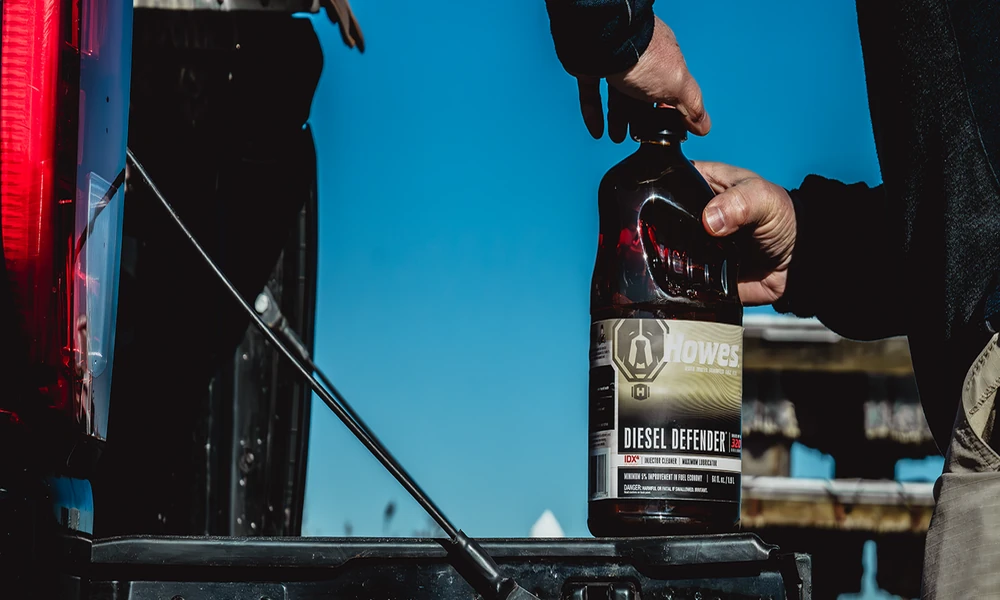
Howes Diesel Treat for Prevention
Diesel Treat is their anti-gel and fuel conditioner. It lowers cold filter plugging, adds lubricity for injectors and pumps, and helps prevent injector deposits. It also works with ultra low sulfur diesel.
The treat rate is simple. For the smaller bottles, use 1 ounce per 5 gallons above 0°F and 1 ounce per 2.5 gallons below 0°F. Cars, pickups, and tractors need a double dose. Howes states that overtreating is not harmful, which gives you room for error on a cold morning.
Diesel Treat removes water instead of mixing it into the fuel. It demulsifies the water and pushes it out so your water separator can remove it. Howes also states that the product is warranty safe and filter friendly, and that it works in biodiesel blends. Their Winter Tow Guarantee adds more confidence: if a truck treated with Diesel Treat fails to keep going in winter, they pay for the tow.
Howes Diesel Lifeline for Fuel That Has Already Gelled
An anti-gel cannot reverse gelling after fuel passes its cloud point. That is where Diesel Lifeline fits. It changes the melting points of wax and ice crystals so gelled fuel can flow again. Howes states that it often works in about 15 minutes and has been proven to -35°F and colder.
You pour it straight into the tank or filter, with no pre-mixing. It also de-ices frozen filters. I suggest keeping a bottle in the cab or toolbox from November through March.
Bulk Options for Farms
If you fill from a farm tank, Diesel Treat Concentrate is made for bulk and inground storage. Howes lists a ratio as strong as 1 gallon per 3,000 gallons above 0°F. It is sold in drums and totes.
A Simple Cold Weather Checklist
1. Add anti-gel before the first hard freeze, not after.
2. Raise your dose when temperatures fall below 0°F.
3. Keep your fuel tank full to limit water from condensation.
4. Check your water separator each week in winter.
5. Replace fuel filters before winter starts.
6. Store a bottle of rescue product in your vehicle.
7. Ask your supplier when they switch to winter blend.
Plan for the Cold Before It Arrives
In Minnesota and the Midwest, diesel can start to cloud near 15°F to 20°F and gel near 0°F or lower. Those numbers fall inside a normal winter for you.
My advice is to treat early, use the correct dose, and carry a rescue product. Howes Diesel Treat and Diesel Lifeline cover both prevention and recovery, and that gives you a plan for every cold morning.
