
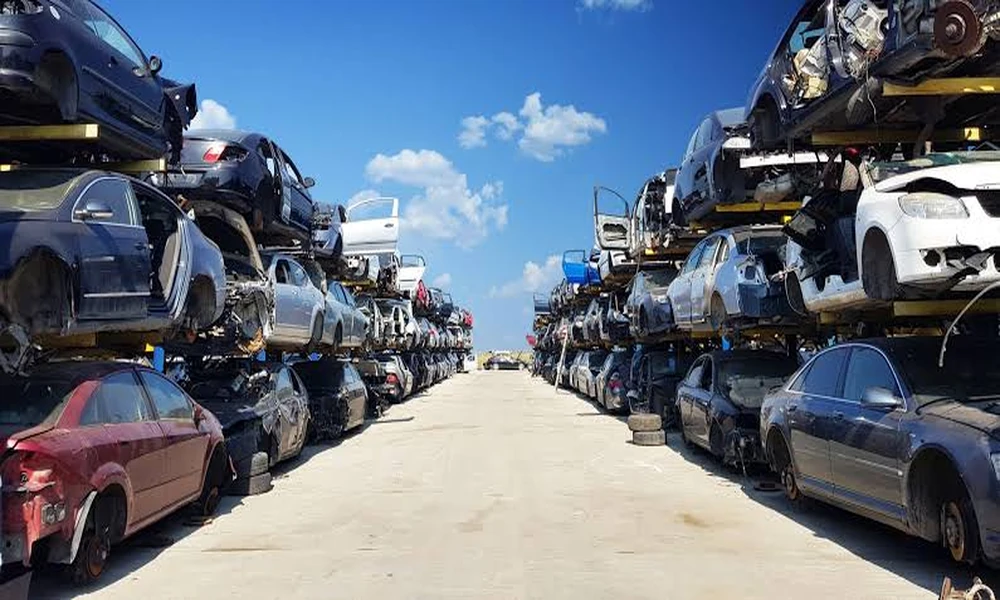
What Really Happens to a Car After It’s Removed? A Look Inside Australia’s Vehicle Recycling Process

What Really Happens to a Car After It’s Removed? A Look Inside Australia’s Vehicle Recycling Process
Every year, well over half a million vehicles reach the end of their working life on Australian roads. Some are written off after a crash. Others simply give out after two or three decades of service, the cost of keeping them roadworthy finally outweighing what they’re worth. For the owner, the story usually ends the moment a tow truck pulls out of the driveway. For the car itself, that’s when the real process begins.
There’s something quietly poignant about watching a car go – the one that got you through your P-plates, or carried a young family through a decade of school runs and holidays, reduced in a matter of hours to a stripped shell on a factory floor. Most owners never see this part. But understanding it changes how you think about that final call to have a car collected.
Few drivers ever see what happens next. There’s a general sense that old cars get “recycled,” but the mechanics of it – the depollution, the dismantling, the shredding, the sorting – remain a mystery to most people outside the industry. That gap in understanding matters, because how a vehicle is retired carries genuine environmental and economic consequences.
Not every operator handling end-of-life vehicles does it properly, and the difference between those that do and those that cut corners is rarely visible from the kerb.
A car is a dense package of materials: steel, aluminium, glass, rubber, plastic, copper wiring, and a handful of fluids and components that are genuinely hazardous if mishandled. Left to rot in a paddock or dumped informally, a vehicle can leach oil, coolant and battery acid into soil and waterways for years.
Handled correctly, that same vehicle becomes something else entirely – a source of recoverable steel, workable second-hand parts and raw material bound for new manufacturing.
The Federal Chamber of Automotive Industries and the Motor Trades Association of Australia examined this exact issue in one of the most detailed studies of its kind conducted locally, drawing on more than a thousand pages of research and input from dozens of government and industry stakeholders. The work mapped Australia’s current decommissioning processes, benchmarked them against international practice, and assessed the capacity of the dismantling and recycling sector to handle the volume of vehicles reaching end of life each year.
One finding stands out: just how fragmented the industry is. Australia’s dismantling and recycling sector is made up of roughly 1,465 businesses, most of them small to medium in size. They’re generally skilled at recovering metals and reusable parts, but non-metal materials remain a persistent gap in the system.
That fragmentation is precisely why the reputation of the operator collecting your vehicle matters. A well-run auto recycler follows a defined sequence of steps designed to extract every bit of value from a car while keeping contaminants out of the ground. A poorly run one skips straight to the crusher.
What Happens After Collection
Once a vehicle is picked up – whether it’s towed from a driveway, delivered from an insurer’s yard, or handed over by a council after an abandonment – it doesn’t go anywhere near a shredder straight away. It’s logged, assessed and staged for processing.
Reputable operators such as Angel Car Removal treat this intake stage as the foundation of everything that follows, because the order in which a car is worked through determines how much of it can actually be saved.
The first real technical step is depollution: draining every fluid the vehicle carries before any cutting, crushing or component removal takes place. That includes engine oil, transmission and brake fluid, coolant, and refrigerant gas from the air conditioning system. Industry guidelines developed for depollution technicians describe this stage as centring on a dedicated draining rig, used to collect fluids such as engine oil, transmission fluid, coolant, brake fluid and refrigerants, with proper storage essential to prevent leakage and contamination of soil and water sources.
Skipping or rushing this stage is one of the clearest markers of a substandard recycler, because it’s where most environmental harm originates when things go wrong.
Refrigerant handling in particular is tightly controlled. Air conditioning fluids have to be transferred out of the vehicle and into gas cylinders as a distinct part of the depollution process, ahead of appropriate downstream treatment, with enforcement split between local authorities and environmental regulators depending on the site. These gases are potent contributors to atmospheric warming if released, so their careful capture is one of the less visible but more important parts of responsible dismantling.
Recovering Valuable Components
With fluids removed, the car moves into the parts-harvesting stage – arguably the part of the process with the biggest economic upside, both for the recycler and for everyday motorists. Engines, transmissions, alternators, starter motors, body panels, glass, seats, wheels and countless smaller components are inspected, tested where necessary, catalogued and stored for resale.
This is where the industry earns its “recycling” label in the truest sense. These aren’t materials being broken down and remanufactured; they’re functioning parts going straight back into service in someone else’s vehicle. According to one industry estimate, as much as 95% of a vehicle’s material can ultimately be recovered through this kind of processing – a figure that reflects just how little of a car needs to end up as landfill when the work is done properly.
For consumers, this stage is where the industry becomes genuinely useful in day-to-day terms. Buying a second-hand alternator or a used door panel from a dismantler is typically a fraction of the cost of a new part. For older or less common vehicles, it’s often the only realistic way to source a replacement at all – the practical, unglamorous engine room of automotive recycling, quietly keeping other cars on the road while an end-of-life vehicle is broken down for its most useful pieces.
Safe Removal of Hazardous Materials
Beyond fluids, a handful of components require deliberate, separate handling because of the specific risks they carry. Lead-acid batteries are pulled and sent to specialised facilities equipped to reclaim the lead and neutralise the acid. Airbags and pre-tensioned seatbelt systems, which still contain small pyrotechnic charges even in a written-off vehicle, need to be deployed or disarmed under controlled conditions rather than crushed live.
Catalytic converters, prized for the platinum-group metals inside them, are removed intact both for safety and because they’re valuable enough to warrant their own secure handling chain.
Practitioner guidance developed for the sector is explicit that this step isn’t optional. Hazardous components such as airbags, batteries and catalytic converters must be removed and disposed of following environmental regulations, with batteries directed to specialised recycling centres for material recovery. In Australia, this sits within a layered regulatory structure. State and territory environmental protection authorities issue and enforce the licences that recycling and dismantling sites need to legally handle these materials, while the movement of hazardous waste across state lines involves its own permit requirements administered federally.
The practical effect is that a legitimate dismantling yard has to satisfy several layers of oversight before it can legally process a vehicle, not just have a truck and a patch of dirt. Tyres are handled separately again. They’re bulky, don’t biodegrade, and create serious fire and mosquito-breeding risks when stockpiled improperly, so they’re generally sent to dedicated tyre recyclers rather than processed on-site.
Giving Metal a Second Life
Once the reusable parts and hazardous materials have been stripped out, what remains is essentially a steel-and-aluminium shell. This is handed over to metal recyclers, who compact and then shred it into fist-sized fragments. From there, powerful magnets and eddy-current separators sort the resulting scrap into ferrous and non-ferrous streams – steel pulled one way, aluminium, copper and other non-magnetic metals sorted another.
That shredded steel doesn’t sit around. It’s one of the most efficiently recycled materials on the planet, feeding directly back into furnaces to become new steel products, sometimes appearing again as sheet metal in a brand-new car within months. This closed loop is the clearest illustration of the circular economy at work in the automotive sector: material that began life as a Commodore or a Corolla can genuinely end up as a section of guttering, a shipping container, or the body of another vehicle entirely.
The scale of this matters more than people tend to assume. With hundreds of thousands of vehicles retiring from Australian roads annually, the volume of recoverable steel and aluminium represents a substantial, ongoing alternative to freshly mined ore – lower in energy intensity and, when the upstream depollution has been done correctly, essentially free of contamination risk.
Why Responsible Recycling Benefits Everyone
The gap between a well-regulated dismantler and an informal “backyard scrapper” isn’t cosmetic. It’s the difference between a car’s fluids ending up safely contained or soaking into the water table, and between its parts being resold responsibly or its shell being crushed with hazardous components still inside.
Industry bodies have been explicit about this risk, warning that operators using flashy websites and paid advertising can appear credible without actually complying with the environmental standards that legitimate auto recyclers are required to meet.
For sellers, the practical takeaway is straightforward: where and to whom you send an unwanted vehicle actually matters. Services like Cash For Cars exist at the consumer-facing end of this chain, but what happens behind that transaction – whether depollution is done thoroughly, whether hazardous components are handled to standard, whether the resulting metal is genuinely recovered rather than dumped – is where the environmental outcome is actually decided.
There’s also a broader economic case for taking this seriously. Auto dismantling and recycling supports thousands of jobs across Australia, from yard technicians to parts-counter staff to metal processors. It keeps replacement parts affordable for the millions of Australians running older vehicles that manufacturers have long since stopped supplying new components for.
The Last Word on a Car’s Final Journey
A car’s last trip rarely gets the attention its first one did, but it deserves it. Every vehicle processed properly is one less source of soil contamination, one less part manufactured from virgin material, and one less shell taking up space in landfill that never needed to be there.
None of this requires an owner to understand the finer points of depollution or eddy-current separation. It only requires choosing a recycler that treats those steps as non-negotiable. Multiplied across half a million vehicles a year, that single choice is what actually decides whether an old car’s last journey does some good on the way out – or simply disappears without a trace.
