
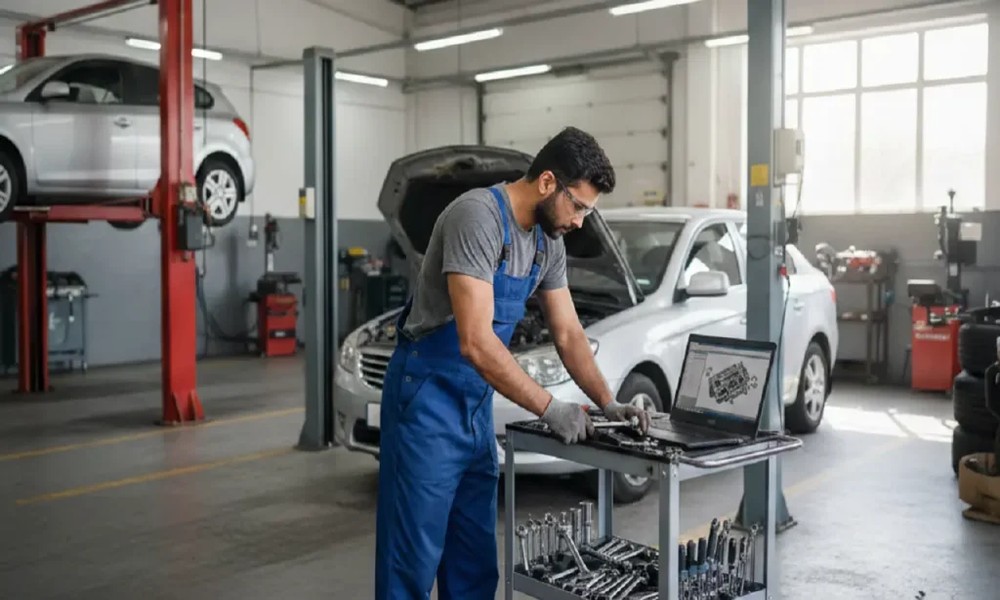
How Workshops Handling High-Volume Car Servicing Keep Standards High (And Which Ones Don’t)

Car servicing at high volume is a test of discipline, not just capacity. Any workshop can push more vehicles through its bays by cutting corners, rushing inspections, and skipping the steps that customers cannot see. The workshops that handle heavy workloads without dropping quality are the ones that have built their operations around systems, not shortcuts.
In Singapore, where the vehicle population exceeds 900,000 and COE cycles drive periodic surges in maintenance demand, the pressure on workshops to service more cars in less time has never been greater. For car owners, the challenge is figuring out which workshops maintain their standards under pressure and which ones let things slide the moment the queue grows long.
The Volume Trap
A workshop’s busiest weeks are often its most dangerous from a quality standpoint. When every bay is occupied and the waiting list stretches into next week, the temptation to speed things up becomes intense.
Common shortcuts include skipping the multi-point inspection checklist, reusing oil drain plug washers instead of replacing them, topping up fluids without checking for leaks, and clearing dashboard warning codes without investigating the underlying faults. None of these shortcuts cause immediate problems. They create slow-burning issues that surface weeks or months later, long after the customer has left a positive review.
The workshops that resist this temptation do so because they have invested in processes that make thoroughness the default, not the exception.
What Good Systems Look Like
A well-run car servicing operation handling high volumes will have several features in common.
- Standardised checklists. Every vehicle that enters the workshop follows the same inspection sequence regardless of how busy the day is. The checklist is not optional. It is documented, signed off by the technician, and available for the customer to review.
- Dedicated roles. In high-volume workshops, different technicians handle different stages of the service. One handles the oil change and filter replacement. Another inspects the brakes and suspension. A third checks electrical systems and fluids. This division of labour reduces fatigue-related errors and ensures each task gets focused attention.
- Parts traceability. Every component installed during a service is logged with a part number and supplier. If a problem arises later, the workshop can trace exactly what was used and when.
- Quality control checkpoints. Before a car is returned to the customer, a senior technician or quality controller reviews the work. This second pair of eyes catches mistakes that the original technician may have overlooked.
Red Flags That a Workshop Is Cutting Corners
Car owners are not mechanics, but there are visible signals that a workshop is prioritising speed over quality.
- No written inspection report. If the workshop cannot show you what was checked and what was found, it is likely that no structured inspection took place.
- Unusually fast turnaround. A comprehensive service takes time. If your car is ready in thirty minutes for what should be a ninety-minute job, ask what was skipped.
- Reluctance to show old parts. A workshop that discards your old oil filter, brake pads, or spark plugs without offering to show them to you may be replacing fewer parts than claimed.
- Generic fluids and parts. Some high-volume workshops reduce costs by using generic lubricants and aftermarket parts that do not meet manufacturer specifications. This is not inherently wrong, but it should be disclosed, not hidden.
- Pressure to add services. Workshops that push unnecessary upsells during every visit are often compensating for thin margins on their core servicing work.
As Goh Chok Tong once said, “We can only succeed as a society if we maintain high standards and a strong work ethic.” The same applies to the workshops that keep Singapore’s vehicles on the road.
Why Specialisation Matters
General workshops that service every make and model face inherent challenges at scale. Each vehicle has different service intervals, fluid specifications, and common fault patterns. A technician who services a Toyota Corolla in the morning and a BMW 3 Series in the afternoon must mentally switch between entirely different maintenance protocols.
Workshops that specialise, whether by vehicle brand, system type, or service category, tend to maintain higher standards at volume because their technicians develop deep expertise in a narrower range of tasks. A workshop known for vehicle maintenance and servicing excellence often achieves that reputation through focus rather than breadth.
What Car Owners Can Do
You do not need to be a mechanic to hold your workshop accountable. A few habits make a meaningful difference.
- Ask for the inspection report. Make it clear that you expect a documented record of what was checked and what was found every time.
- Keep your own service log. Track mileage, dates, and work performed. Patterns become visible over time, and inconsistencies are easier to spot when you have a personal record.
- Request a test drive. For any car maintenance service that involves brakes, suspension, or transmission components, ask the workshop to take the car for a brief test drive before handing it back.
- Build a relationship. Workshops that know you as a regular customer are less likely to cut corners on your vehicle. Loyalty, when placed with the right workshop, pays dividends in service quality.
The Takeaway
High-volume car servicing is not inherently inferior to boutique, appointment-only workshops. Some of the best-run operations in Singapore service dozens of vehicles daily without compromising on quality. The difference is always in the systems. Workshops that invest in structure, accountability, and skilled staff deliver consistent results regardless of how full the appointment book gets.
